The Best Desktop UV Printer in 2026: Every Machine Compared
Desktop UV printers now share the same desk, from $1,599 to $9,299. The field moved again this month: eufyMake cut its ink prices about 30%, and four challengers are heading for launch. Here is the whole sub-$10,000 field as of July 2026: what each machine prints, what the ink costs per liter, and which one fits which kind of work.
Contents
- Every desktop UV printer under $10,000, in one table
- How to read a UV printer spec sheet
- The machines you can buy today
- eufyMake E1: the default choice, with cheaper ink since July 13
- OMTech Spectra A3+: the production pick with open ink
- Epson SureColor V1070: the establishment option
- Procolored and the generic flatbeds: the gray zone
- The pre-order wave: four machines you can't unbox yet
- xTool O1 Omni: the apparel machine
- Longer ePrint: the open-ink bet that already raised $4M
- HeyGears G1 and G1X: the only path to full-color 3D objects
- Morpho: the $1,599 floor, and the most ambitious spec sheet in the field
- What the ink really costs, per liter
- The costs nobody prints on the box
- Which one should you buy
- Frequently asked questions
The best desktop UV printer you can buy in July 2026 is the eufyMake E1 at $2,499 (2,499 EUR): it ships in 1 to 3 business days, it has a year of independent reviews behind it, and every consumable has a public price. Its famous weakness just got smaller, too: on July 13 eufyMake cut ink prices about 30%, to about $300 per liter. Four challengers ship between August and Q4 2026 (xTool, Longer, HeyGears, Morpho), every one of them aimed squarely at the E1's running costs, and their pre-order discounts lapse on different dates. So the real question this month is not only which machine is best; it is whether to buy the best machine that exists or hold a refundable deposit on the one that might beat it. In a hurry: skip to the table.
First, one sentence on what these machines are, because the marketing blurs it: a UV printer jets ink onto an existing object (wood, acrylic, metal, glass, leather, a phone case, a 3D print) and cures it instantly with UV light, stacking ink into raised, touchable texture a few millimeters high. With one exception noted below, a UV printer decorates things; it does not make them.
Every desktop UV printer under $10,000, in one table
| Machine | Price (US) | Printhead | Max relief | Ships |
|---|---|---|---|---|
| eufyMake E1 | $2,499 / $3,299 | Piezo (model unpublished) | 5 mm | Now, 1-3 days |
| xTool O1 Omni (3 editions) | $1,699 / $2,699 / $2,799 | Epson F1080 x1-2 | 7 mm | Aug 2026 target |
| HeyGears G1 / G1X | $1,699-3,299 VIP | F1080 / i3200 | 5 mm (3D: 150 mm objects) | Kickstarter in July, ships '2026' |
| Morpho / Morpho Pro | $1,599 / $2,799 SEB | F1080 / i3200 | Up to 60 mm | Kickstarter expected Aug, ships Q4 2026 |
| OMTech Spectra A3+ (dual) | $4,799.99 | 2x Epson F1080 | 5 mm | Late July 2026 |
| Epson SureColor V1070 | $9,299 | Epson MicroPiezo | None published | Dealers, backorder |
| Procolored V4 to V11 Pro | $2,299-5,999 | Legacy Epson (L800-TX800) | Varies | Now |
| Longer ePrint SE / ePrint | $2,199 / $2,999 | Undisclosed | Up to 60 mm | Pre-order, deliveries unconfirmed |
All prices checked July 4, 2026 on official stores. eufyMake E1: Basic / Deluxe bundles, in stock. OMTech: dual-head price on omtech.com, current batch estimated late July; a single-head version sells via Amazon without a confirmed price. Epson V1070 is orderable through dealers at $9,299 but showed backorder status everywhere we checked. xTool, HeyGears and Morpho prices are deposit-locked pre-order rates against higher MSRPs ($2,499-3,499 xTool, $2,699-5,499 HeyGears, $2,699-4,999 Morpho). Longer ePrint web pre-order prices; its Kickstarter backers were promised June 2026 delivery, which no independent report yet confirms. The cheapest industrial-brand desktop machine, Roland's VersaSTUDIO BD-8, sits just above this table at $11,595.
How to read a UV printer spec sheet
Four things decide whether any machine on this list fits your work. They also happen to be the four things the launch pages talk about least.
The printhead is the product. In a desktop UV printer, one component sets the resolution, the speed, the ink channels, and your biggest future repair bill: the head. The field splits into three tiers. Consumer-class Epson heads (F1080, also sold as XP600; roughly $350 on the open market) power the xTool, the cheaper HeyGears and Morpho models, the OMTech, and most generics. The industrial Epson i3200 (roughly $1,000 open-market, 3,200 nozzles, 2400 DPI) powers the HeyGears G1X and the Morpho Pro. And two machines use heads you cannot cross-shop: the eufyMake E1's unpublished piezo head ($599 official replacement) and the Epson V1070's serviced-not-sold MicroPiezo. Heads are wear parts with 6-to-24-month published lifetimes; budget for one replacement before the warranty card has yellowed.
White ink is the machine's real engine. Every color layer on dark or clear material sits on a white base, and every millimeter of raised texture is stacked white ink. That is why white comes in bigger bottles (290 ml on the xTool and Morpho), why dual white channels are a selling point, and why white consumption, not CMYK, dominates running cost.
Relief numbers need a tape measure. The shipping norm is 5 mm (eufyMake, OMTech, HeyGears) to 7 mm (xTool). Two unshipped machines, the Longer ePrint and the Morpho, list 60 mm, roughly ten times the field; Morpho has shown tall printed samples, up to a 35 mm volcano. Stacking 60 mm of cured ink means hundreds of passes and serious ink cost per piece, so the first independent print with a time and an ink weight attached will show what those ceilings mean in practice.
Per-liter is not per-print. Ink prices differ by 6x across this field, but no vendor except eufyMake has a year of real-world consumption data in public. Cleaning cycles, white base layers, and failed prints are where the money actually goes, and only shipped machines have honest numbers.
The machines you can buy today
eufyMake E1: the default choice, with cheaper ink since July 13
The E1 is the machine that created this category. Its 2025 Kickstarter closed at $46.76M from 17,822 backers, the most funded crowdfunding campaign in history, and since May 2026 it has simply been a product: $2,499 for the Basic bundle, $3,299 for the Deluxe with the rotary attachment and UV-DTF laminator (EU store: 2,499 and 3,299 EUR), in stock, shipping in 1 to 3 business days.
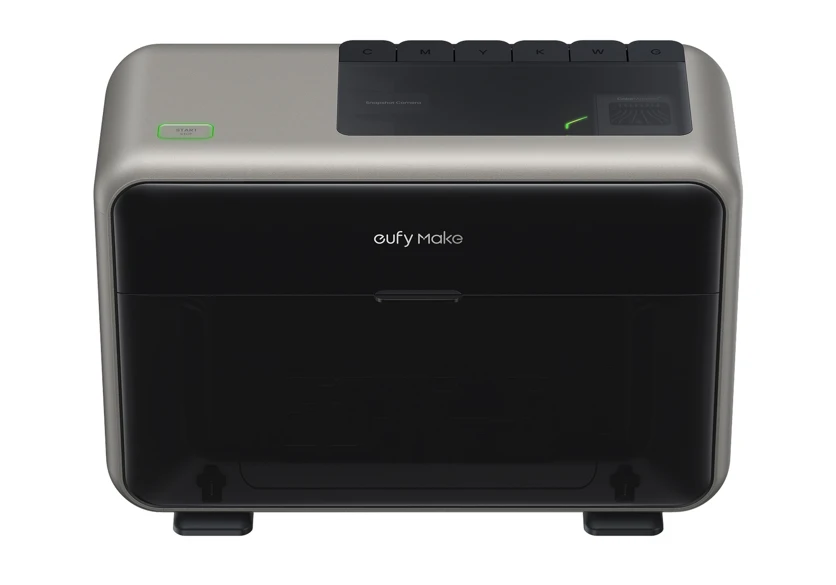
The hardware case is easy to make. A 330 x 420 mm bed, 1440 DPI, objects up to 100 mm tall (60 mm with the camera doing the alignment for you), 5 mm of raised "Amass3D" texture, GREENGUARD Gold certified ink, and a software ecosystem (eufyMake Studio plus a 20,000-template library) that nothing else in this table matches. A year of reviews agrees on the output: Tom's Hardware, Notebookcheck (4/5), Make: and Hackster all praise the print quality and the material range, and FauxHammer's one-year review (July 4, 2026, 5/5) reports a unit that sat in storage for 8 to 9 months after a proper shutdown and printed immediately on wake.
The same reviews agree on the catch, and it deserves its own paragraph rather than a footnote. E1 ink is proprietary and no third-party ink works, though the bill just shrank: since July 13, 2026 a 100 ml cartridge costs $29.99, about $300 per liter, down from the $430 the E1 carried since launch, with subscriptions from $19.99 and a high-capacity tank system announced for later this year (the full price breakdown). The automated maintenance is thorough and opaque: Tom's Hardware measured a deep clean at $7 to $10 in fluids plus 6 to 12 ml of ink, there is no vacation mode, and Make: warns the machine purges ink on shutdown, so it wants to stay powered on. The $599 replacement head has no published lifetime, and eufyMake sells a $399.99 Care plan largely because of it. None of this is hidden, and none of it has stopped the E1 being the best-reviewed machine here. It is simply the price of the polished option: you are paying Anker margins for Anker polish. One quirk to know before your first full-bed job: the snapshot camera's accuracy drifts toward the bed edges, a fixable one we cover in the E1 alignment guide.
Buy it if you want to be printing this week, you value a proven machine and mature software over running-cost optimism, and your volume is craft-shop rather than production-line.
OMTech Spectra A3+: the production pick with open ink
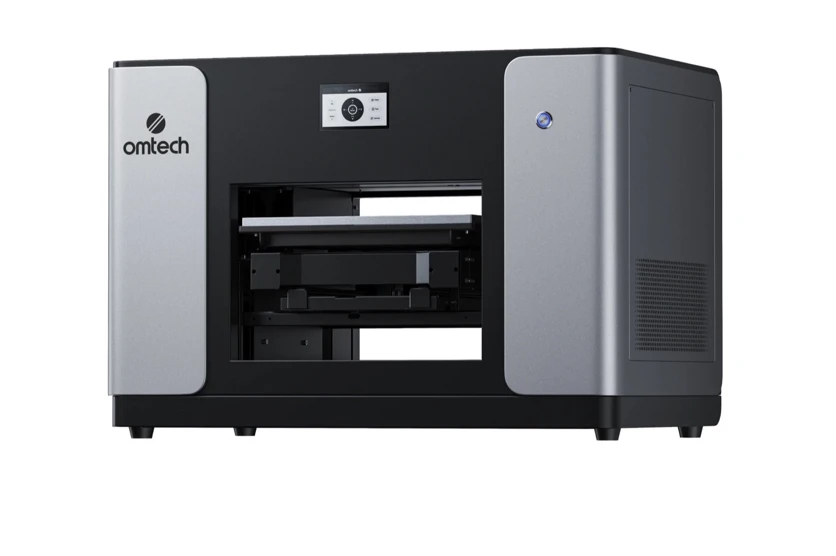
The Spectra A3+ Dual Printhead is the anti-E1: charmless, print-shop-shaped, and built around exactly the numbers eufyMake keeps closed. $4,799.99 on omtech.com as of July 4, 2026 (marked down from $5,499.99, free ink set included, current batch estimated to ship late July), it runs two Epson F1080 heads over the biggest bed in this comparison, 350 x 450 mm, with 140 mm of object clearance, a vacuum table to hold flat stock, infrared height detection, and a stated 2.4 m²/h at production settings. Relief is the same 5 mm the E1 offers, and the rotary attachment is $149.99 against eufyMake's $399.99.
The ink system is the argument. It is an open platform: 250 ml tanks, no chips, no lock-in, and OMTech's own bottled ink at prices the company puts at about $66.70 per kg (a manufacturer figure we could not independently verify, but bottled-versus-cartridge economics point the same direction). The one substantial independent review, Ryan Mercer's in February 2026, opens with "TLDR: I love this thing" and then spends its honest half reminding you that "UV printers require maintenance. That's just reality... This is not a plug-it-in-and-ignore-it machine. But it is manageable."
The catches: it is new (launched into 2026, so no long-term reliability data), the software is a PC RIP rather than a consumer app, there is no texture or asset library, and a single-head version exists only through Amazon without a price OMTech will put on its own store.
Buy it if you are running batches for money, you want out of the cartridge economy, and you can give a machine twenty minutes of attention a day without resenting it.
Epson SureColor V1070: the establishment option
The V1070 is what a desktop UV printer looks like when a printer company builds one. $9,299 as of July 4, 2026 (it launched at $8,495 in late 2024 and the price went up, not down), an A4-class 212 x 299 mm bed, media up to 70 mm thick, Epson's own MicroPiezo head at 1440 x 1440 DPI, CMYK plus white and varnish in 140 ml cartridges at $77 each, about $550 per liter. No rotary option, no published raised-relief spec (the varnish does gloss and matte texture effects, not the E1's millimeters of embossing), and the Edge Print PRO RIP requires a Windows PC.
What the money buys is not specs. It is the only machine in this table with a real dealer and service network behind it, a known-quantity head that gets serviced rather than swapped by you, and white-ink reliability that craft reviewers describe as the reason established shops pick it. Silhouette School's April 2026 comparison put it plainly: at $9,299 it is an investment, for the right business. On raw capability per dollar it loses to everything else here; on the cost of a week of downtime, it wins.
Buy it if print output is your payroll, an A4 bed covers your products, and you would rather pay $9,299 once than learn printhead maintenance.
Procolored and the generic flatbeds: the gray zone
Below and beside the brand-name field sits the import tier. Procolored is its most visible face: a ladder from the $2,299 V4 (A5 bed) through the $3,599 V6 to the $5,999 dual-head V11 Pro (1,699 to 4,699 EUR on its EU store), all built on legacy Epson consumer heads, all with cheap bottled ink and no subscriptions. The prints can be good, and its US-based support gets genuine praise in reviews. Two facts belong next to that: in May 2025, Procolored's official software downloads served malware (a remote-access backdoor plus a crypto-clipper) for about six months, initially dismissed by the company as false positives, and its Trustpilot record is sharply mixed, with shipping damage and warranty friction the recurring themes.
Below that, the no-name XP600 tier: A3-class flatbeds with rotary kits around $2,699 (IEHK's US-imported A3 is the verifiable anchor; Amazon and AliExpress go lower), 150 mm object clearance, bottled ink at open-market prices. You get flatbed capability per dollar nothing branded matches, and you get no certifications, no real warranty channel, RIP software of dubious provenance, and the standing assumption that you will be swapping $100-200 XP600 heads yourself. For a tinkerer with print-shop ambitions that can be a fine deal. For anyone who needs the machine to just work, it is not.
Buy one if you enjoy maintenance as a hobby, you scan every download with something you trust, and the difference between $2,700 and $2,500 of monthly revenue is survivable.
The pre-order wave: four machines you can't unbox yet
Between June 29 and July 2, 2026, three companies opened deposit campaigns for desktop UV printers, joining one that crowdfunded over the winter. The three newcomers run the same playbook: a small refundable deposit locks a launch price hundreds or thousands below a stated MSRP. The fourth, Longer, already banked its campaign and now sells web pre-orders at higher prices. None of the four can put a shipped, independently reviewed unit on your desk today. That does not make them bad bets; it makes them bets.
xTool O1 Omni: the apparel machine
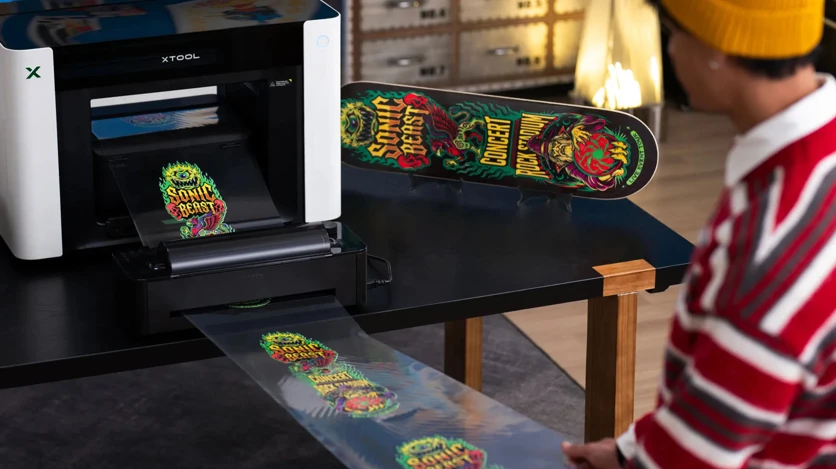
The O1 Omni's pitch is four print methods in one box: UV direct-to-object, UV DTF transfer film, and, on the top edition, DTG and DTF for actual fabric. Launch pricing (deposit phase runs to a July 15 final payment, shipping "as early as August 2026"): Single UV $1,699, Dual-Head UV $2,699, UV + DT Fabric $2,799, against MSRPs of $2,499 to $3,499. Official EU prices arrived this week: 1,549 / 2,499 / 2,549 EUR at a 20% VAT reference rate. The published ink prices are aggressive, $13.99 per 125 ml at launch, about $112 per liter, and 7 mm of relief tops the shipping field. The full edition-by-edition breakdown, and what the $1,699 edition can't do, is in our xTool O1 Omni guide.
Know three things before the deposit. Only the $2,799 Fabric edition prints garments, and xTool lists no fabric upgrade path for the UV editions. The ink system is closed, so the cheap per-liter price is xTool's to keep or change. And the Berlin launch demos showed real teething troubles: Tom's Hardware saw false starts and heard of printhead-object collisions, on pre-production units running early software.
Reserve it if apparel is anywhere in your plan (nothing else here prints a T-shirt), or the dual-head speed at $2,699 fits a workload the E1 is too slow for, and August-at-the-earliest works.
Longer ePrint: the open-ink bet that already raised $4M
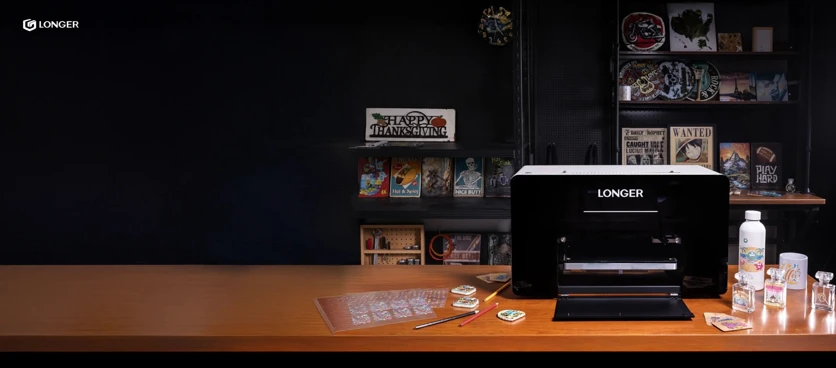
The ePrint is the furthest along of the challengers. Its Kickstarter closed in January 2026 at $4.09M from 1,540 backers, with deliveries promised from June 2026; as of July 4 we found no independent confirmation that backer units have landed, so treat "shipping" as imminent rather than proven. Web pre-orders run $2,199 for the single-head ePrint SE and $2,999 for the dual-head ePrint (1,999 and 2,699 EUR), well above the $1,499/$1,899 Kickstarter tiers, with combo bundles to $4,899.
The spec sheet is the most aggressive in the field: two printheads with 12 ink channels (CMYK plus six whites and two varnishes), a 310 x 420 mm bed, a stated 6x speed advantage on white-heavy texture work, a 60 mm relief ceiling on the spec sheet, a 16 MP vision system, and, most importantly, an explicitly open ink system that welcomes third-party bottles. That last line is the whole thesis: ePrint owners escape the cartridge economy that defines the E1.
The counterweights: Longer has not disclosed whose printheads these are, which is unusual in a field where the head is the product. Its own store lists no ink SKUs at all as of July 4, so the open-ink machine currently has no first-party ink price. The printhead warranty is 3 months (12 on the machine), and no independent review of a production unit exists yet.
Reserve it if running cost matters more to you than a proven track record, you want texture throughput (those six white channels), and you can tolerate being in the first cohort that finds out whether the 60 mm figure survives a tape measure.
HeyGears G1 and G1X: the only path to full-color 3D objects
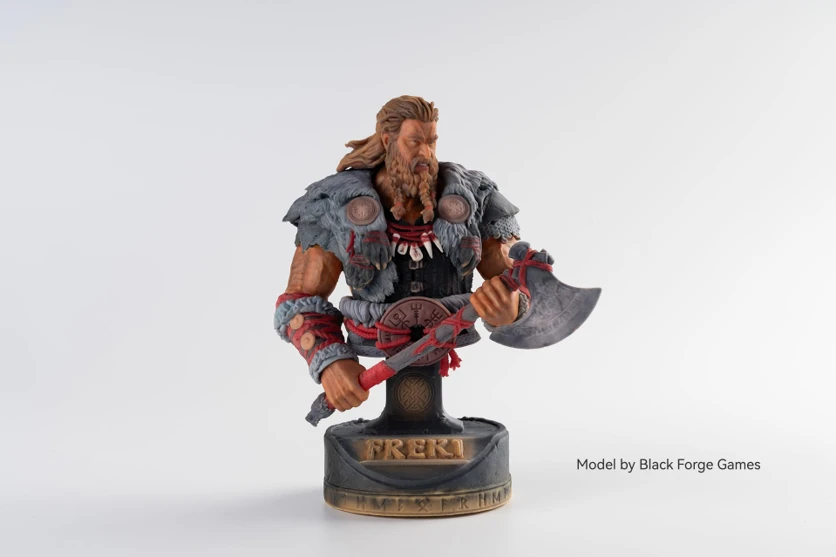
The G1 Series is playing a different game. The two starter packs ($1,699 G1, $2,999 G1X in VIP pre-order pricing, against $2,699 and $4,999 MSRPs) are UV texture printers like everything else here, 5 mm relief on a 420 x 330 mm bed. The $3,299 G1X Full-3D Pack ($5,499 MSRP) is the exception in this entire article: with its Resin Station it prints freestanding full-color 3D objects up to 150 mm tall, color built into the model, supports that dissolve in water. The only shipping machine that does the same job is a Mimaki at roughly $50,000. Tier-by-tier detail is in our HeyGears G1 guide.
The week-old news is consumables: on June 30 HeyGears published real prices, and they are the cheapest in the field. 2D UV ink at $25 to $35 per 300 ml bottle at launch ($83 to $117 per liter, roughly a quarter of eufyMake's rate), 3D resin at $25 to $35 per liter, both against MSRPs of $39 to $59 once the launch pricing ends. Printhead replacements remain the soft spot: HeyGears' June Q&A estimated under $600 for the G1's F1080 and under $2,000 for the G1X's i3200, figures it has not republished since, and the published head lifetimes (6 to 12 and 12 to 24 months) make those real line items.
The risk profile is plain: the Kickstarter it all hangs on was still "coming this July" as of July 4, shipping is stated only as "expected to begin in 2026", there is no official EUR pricing, and zero independent hands-on reviews exist. HeyGears is an eight-year-old manufacturer with dental and audio production lines, which lowers the vaporware risk without removing the calendar risk.
Reserve it if full-color 3D is the actual job, because nothing else at this price does it, or if the G1 Starter's $1,699 with the field's cheapest ink is worth a year of patience to you.
Morpho: the $1,599 floor, and the most ambitious spec sheet in the field
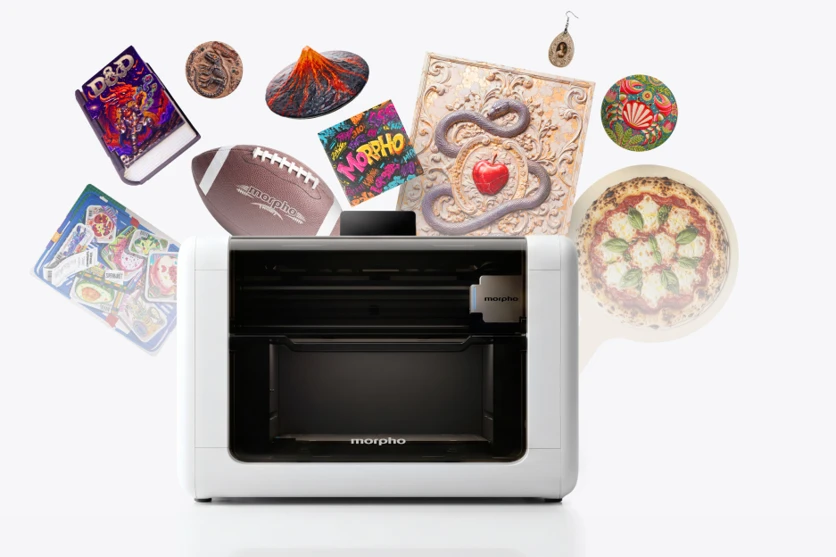
Morpho, announced July 2 by a company founded by DJI's former camera chief, sets the field's price floor at $1,599 for the F1080 model and $2,799 for the i3200 Pro (Super Early Bird prices against $2,699 and $4,999 MSRPs), held by a $50 refundable deposit worth $653 in rewards, including $200 cashback. The price is the least interesting thing about it. On paper this is the most instrumented machine in the comparison, and several of its ideas exist nowhere else at this price.
The design is genuinely different. Instead of sliding the bed under a fixed head, Morpho fixes the bed and moves the printhead over it on a gantry, which keeps a heavy object from shifting mid-print and gives it 168 mm of clearance inside a closed, filtered box, the tallest enclosed volume here. Alignment is where it pulls furthest ahead: four cameras and a laser, led by a dual 8 MP stereo-vision pair that reads an object's height and contour to a stated 0.2 mm, so where the E1 flattens one snapshot and drifts toward the bed edges (its known weak spot), Morpho measures depth instead of guessing it. A built-in spectrophotometer, usually a production-shop tool, handles color calibration and brand-swatch matching.
It is also the most open machine here. Refillable cartridges sit beside proprietary ones, the jig system ships with an SDK and open designs you can 3D print yourself, and the accessory list reads like a workshop kit: a Rotary Jig that levels cups and bottles with the cameras, an Electrostatic Mat that holds paper-thin stock flat without a vacuum table, and a roll-to-roll UV DTF unit in development. Behind it, per a two-hour livestream, is a 200-engineer team and a maintenance design that runs without cleaning or moisturizing cartridges.
The asterisks are still the article's largest: the Kickstarter is expected in August but not booked, shipping guidance is Q4 2026, Morpho hasn't shipped hardware before, and one ink price exists so far ($39.99 per 290 ml of white, about $138 per liter, a bonus-item valuation). A spec sheet this good is worth watching precisely because it still has to become a machine.
Reserve it if the field's most capable-on-paper printer at its lowest price is worth a refundable $50 and the patience to see a young company deliver it.
What the ink really costs, per liter
Machine prices converge around $2,500; ink prices do not. This table is the clearest single difference between these ecosystems, read with the caveat that launch prices are promotional and per-liter is not per-print.
| Machine | Format | Launch / current | At MSRP |
|---|---|---|---|
| eufyMake E1 | 100 ml cartridges, proprietary | $300/L ($29.99 each; $200-240/L on subscription) | same |
| xTool O1 Omni | 125/290 ml bottles | $83-112/L | $121-160/L |
| HeyGears G1/G1X | 300 ml bottles | $83-117/L | $130-197/L |
| Morpho | 290 ml cartridges, refillable | ~$138/L (white, only figure) | unpublished |
| OMTech Spectra A3+ | Bottles, open system | ~$67/kg (manufacturer figure) | n/a |
| Longer ePrint | 200 ml cartridges, open system | No ink SKUs published | n/a |
| Epson V1070 | 140 ml cartridges, proprietary | $550/L ($77 each) | same |
Official store prices, July 4, 2026; eufyMake re-checked July 13, 2026, the day it cut ink prices about 30% and announced a high-capacity tank system with ink at 'around $0.1x/ml' for later this year. HeyGears and xTool launch prices are crowdfunding/pre-order promotions; their MSRP columns are the stated regular prices. OMTech's $66.70/kg is its own marketing figure for an open-bottle system that also accepts third-party ink, as does Longer's. Varnish and specialty inks run higher on every machine. None of the pre-order vendors has published ml-per-print consumption, so per-liter gaps overstate or understate real cost-per-item depending on cleaning-cycle behavior, which only shipping machines have public data on.
Two readings. First, the sticker story: the challengers price ink well below the incumbents, which is the discount you are paid for accepting pre-order risk, it evaporates partially at MSRP, and eufyMake just answered with a 30% cut of its own. Second, the structural story: OMTech, Longer and, through its refillable cartridges, Morpho let you escape to third-party bulk ink, at street prices no cartridge system matches, while eufyMake, xTool and Epson keep the door closed (eufyMake's announced tank system cuts the price, not the lock-in). Over a printhead's lifetime, the open-versus-closed decision is worth more than any single sticker in this article.
The costs nobody prints on the box
Every machine here shares four running costs that no launch page leads with. We learned them from the one machine with a year in public, and they apply, in some ratio, to all of the others.
- Idle time costs ink. UV ink settles and clogs, so every machine runs automatic cleaning cycles. On the E1, a deep clean burns $7 to $10 in fluids and 6 to 12 ml of ink; HeyGears quotes 3 to 5 ml per channel after three idle days; xTool and Morpho describe smarter systems (a 14-day vacation mode, a no-cleaning-cartridge design) that no third party has measured yet. A UV printer that prints nothing all week still spends.
- The printhead is a consumable with a warranty shorter than the machine's. Three months of head coverage against 12 for the chassis is the standard fine print (eufyMake and Longer both use it). At $350 to $2,000 a head, amortize it into every quote you send.
- White ink dominates. Dark substrates, clear acrylic, and every millimeter of texture ride on white base layers. Plan for white to be your biggest ink line, ahead of all four colors together on textured work.
- Ventilation is still a room requirement. GREENGUARD Gold ink certifications (eufyMake, xTool, Roland at the boundary) mean low emissions, not none; filters are consumables, and cured ink smells during maintenance. Plan for airflow the way you would for a resin 3D printer.
For turning any of this into a real quote, the inputs are the same as for any print's true cost: material, machine wear, energy, labor, failure rate.
Which one should you buy
Buy the machine that exists, unless a challenger does a job the E1 cannot do at any price. That is the whole verdict, and it decomposes by use case:
- You want to be printing this month: the eufyMake E1, $2,499. Accept the $300/L ink, freshly cut from $430, as the cost of a solved problem. If your volume justifies it, the OMTech Spectra A3+ at $4,799.99 buys the batch throughput and the open ink system the E1 refuses to sell you.
- Apparel is part of the plan: the xTool O1 Omni UV + DT Fabric, $2,799 early bird, is the only machine here that prints a shirt. Buy the fabric edition up front; there is no upgrade path from the UV editions.
- You want full-color 3D objects, not decorated surfaces: the HeyGears G1X Full-3D Pack, $3,299 VIP. Its only shipping competitor costs $50,000. Price in the Kickstarter wait.
- Running cost is the business model: the Longer ePrint ($2,999) or the OMTech, the two genuinely open-ink machines. The ePrint's 12 channels and 60 mm ceiling are the bigger promise; the OMTech is the one you can buy.
- You are optimizing for uptime, not price: the Epson V1070, $9,299, with the only dealer service network in the field.
- You like a cheap option on the future: Morpho's $50 refundable deposit on the $1,599 F1080 model is the lowest-cost seat at the table. Watch whether the company publishes an ink price list before the campaign asks for real money.
The one machine class to avoid buying casually is the gray-import tier: between Procolored's malware episode and the no-name flatbeds' nonexistent support, the $500 saved is a customer-service incident away from spent.
And if this list made you want a Mimaki instead: the cheapest industrial-brand desktop UV machine, Roland's VersaSTUDIO BD-8, is $11,595 with a bed smaller than a sheet of A4. The machines above exist because that price umbrella left a lot of room underneath.
Frequently asked questions
What is the best desktop UV printer in 2026?
The eufyMake E1 ($2,499, or 2,499 EUR) is the best desktop UV printer you can actually buy as of July 2026: in stock, a year of independent reviews, 5 mm raised texture, and fully published consumable prices. The strongest challengers (xTool O1 Omni, HeyGears G1, Longer ePrint, Morpho) are all pre-orders shipping between August 2026 and Q4 2026 at the earliest.
How much does a desktop UV printer cost?
Between $1,599 and $9,299 as of July 2026. Pre-order pricing starts at $1,599 (Morpho F1080) and $1,699 (xTool O1 Omni Single UV, HeyGears G1). Machines you can buy today start around $2,299-2,499 (Procolored V4, eufyMake E1), with the dual-head OMTech Spectra A3+ at $4,799.99 and the Epson SureColor V1070 at $9,299. Budget separately for ink and a replacement printhead.
Which desktop UV printer has the cheapest ink?
Among published prices, HeyGears at $83 to $117 per liter and xTool at $83 to $112 per liter (both launch prices; $121 to $197 at MSRP), against $300 per liter for the eufyMake E1 (since its July 13, 2026 cut; $200 to $240 on subscription) and about $550 for the Epson V1070. Structurally cheapest are the open-ink machines (OMTech Spectra, Longer ePrint), which accept third-party bottled UV ink at bulk prices no cartridge system matches.
Can a desktop UV printer print on T-shirts?
Only one machine in this field prints directly on garments: the xTool O1 Omni UV + DT Fabric edition ($2,799 early bird), which adds a dedicated fabric printhead for DTG and DTF. Everything else prints UV-DTF transfer stickers at most, which suit hard surfaces, not fabric. The Longer ePrint also offers a $459 DTF upgrade kit on its dual-head model, untested independently so far.
Is a UV printer a 3D printer?
No. A UV printer decorates existing objects with color and raised texture, typically 5 to 7 mm of stacked ink on shipping machines. The one exception is the HeyGears G1X Full-3D Pack ($3,299 VIP pre-order), which uses a resin station to print freestanding full-color 3D objects up to 150 mm tall; its only shipping competitor is a roughly $50,000 Mimaki.
Can a UV printer print on 3D prints?
Yes, and it's one of the best use cases for a print business: full-color graphics and textures directly onto PLA, PETG or resin parts. The eufyMake E1 lists 300+ substrates including 3D-printed plastics (reviewers verified PLA and TPU), HeyGears lists 400+, Morpho 2,000+ surfaces. Matte surfaces take ink better than glossy ones; a quick alcohol wipe first is the standard prep.
What printhead should a UV printer have?
The printhead decides resolution, speed, channels and your biggest repair bill, so check it before any other spec. Consumer-class Epson F1080/XP600 heads (roughly $350 open-market, 6-12 month typical lifetime) power most machines under $3,000. The industrial Epson i3200 (roughly $1,000, 12-24 months, 2400 DPI) powers the HeyGears G1X and Morpho Pro. Closed designs (eufyMake's $599 head, Epson's serviced MicroPiezo) tie you to the vendor for parts.
Do UV printers need ventilation?
Yes, plan for it. GREENGUARD Gold certified inks (eufyMake, xTool) and built-in filtration reduce emissions, but uncured UV ink has an odor, maintenance cycles release it, and filters are consumables. Treat a UV printer like a resin 3D printer: a ventilated room, not a bedroom desk. Morpho and Longer both advertise low-VOC ink and internal air purification; neither has independent test data yet.
Should I wait for the 2026 Kickstarter UV printers or buy the eufyMake E1?
Need output this summer: buy the E1 ($2,499); it's the only leading machine that ships today. Can wait months: the deposits are cheap options ($50, refundable, locking $800 to $2,200 off MSRP), and the xTool (August target), Longer (deliveries due now), HeyGears (Kickstarter in July) and Morpho (Q4 2026) all promise more per dollar. The honest framing: you're trading a proven machine for a discount plus calendar risk, and the four launch-price windows expire at different dates.
Are the 60 mm texture claims from Longer and Morpho real?
The shipping desktop norm is 5 mm (eufyMake, OMTech, HeyGears) to 7 mm (xTool); Longer and Morpho both list 60 mm, and Morpho has shown tall printed samples up to a 35 mm volcano. Stacking 60 mm of UV ink means hundreds of white-ink passes, hours per piece and substantial cost, so independent prints with a time and ink weight attached will show what those ceilings mean in day-to-day work.
Sources & methodology
- eufyMake E1: official US and EU product pages ($2,499 / $3,299, in stock 1-3 days), ink ($29.99/100 ml since July 13, 2026), printhead ($599), accessories and Care plan
- eufyMake E1 independent reviews: Tom's Hardware (maintenance costs), Notebookcheck 4/5, Make: (Feb 17, 2026), FauxHammer one-year 5/5 (Jul 4, 2026), The Crafty Catsman (Jul 3, 2026)
- OMTech Spectra A3+ dual-head: official product page ($4,799.99, late-July batch, free ink set) and AU spec table (5 mm embossing, 350 x 450 mm, 2x F1080, 20 ml/m²)
- OMTech Spectra U1 Pro independent review: Ryan Mercer
- Epson SureColor V1070: official product page ($9,299), Sept 2024 launch release ($8,495), UltraChrome UV 140 ml cartridges ($77 at HeatPressNation), dealer availability
- xTool O1 Omni: official US and EU pages ($1,699 / $2,699 / $2,799; EUR 1,549 / 2,499 / 2,549; full ink table; 7 mm relief; deposit to Jul 15), PRNewswire MSRPs, Tom's Hardware Berlin demo report (Jun 29)
- HeyGears G1 Series: official deposit pages (VIP $1,699 / $2,999 / $3,299, MSRPs, Jun 30 consumable price sheet: ink $25-35/300 ml, resin $25-35/L, head lifetimes)
- Longer ePrint: official US and EU pre-order pages ($2,199 / $2,999; EUR 1,999 / 2,699; combos; accessories; no ink SKUs), Kickstarter stats via Kicktraq ($4.09M / 1,540 backers), warranty policy (12 mo / 3 mo head)
- Morpho: official site and estore ($1,599 / $2,799 SEB, $50 deposit and $653 rewards, 60 mm spec both models, Q4 2026 shipping FAQ), launch press release (Jul 2, 2026)
- Procolored: official US and EU stores (V4 $2,299 to V11 Pro $5,999), malware incident coverage (BleepingComputer, G Data, May 2025)
- Generic XP600 tier anchor: IEHK A3 UV flatbed/rotary ($2,699, 500 x 320 mm, 150 mm clearance); boundary reference Roland VersaSTUDIO BD-8 ($11,595 MSRP)
- Epson printhead open-market prices (F1080/XP600 ~$350, i3200 ~$1,000): parts vendors, cross-checked
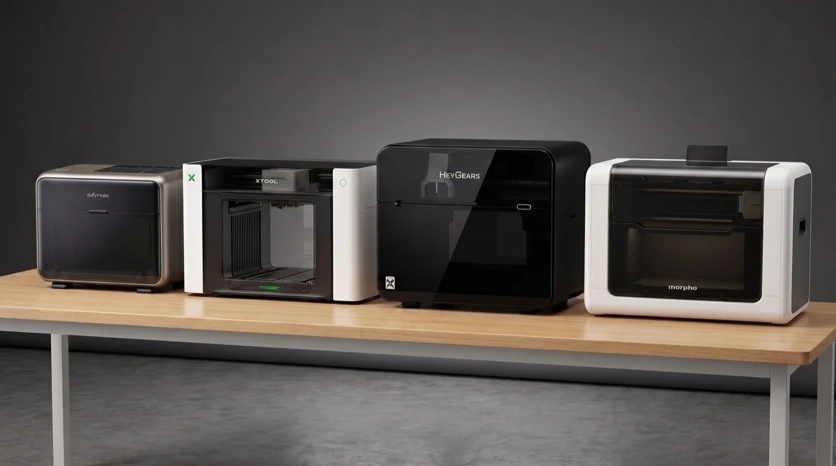
- Cover: an illustrative lineup of the eufyMake E1, xTool O1 Omni, HeyGears G1 and Morpho, not to scale (judge sizes by the spec tables). In-body images: official product media from eufyMake, OMTech, xTool, HeyGears, Longer and Morpho
Share this article
Related articles
Printers · Jun 29, 2026
xTool O1 Omni Printer: Prices, Editions, and Ink Costs
xTool says 'from $1,699' for a 4-in-1 that prints on wood, tumblers, and T-shirts. That number is a deposit-locked early bird on the single-head model, and the only edition that does all four jobs is $2,799. Here's every price, the published ink costs, and what it can't do.
19 min read
Printers · Jun 12, 2026
HeyGears G1 and G1X: Full-Color 3D Printing Gets a Desktop Price
Full-color 3D printing used to mean a $50,000 machine. HeyGears put it on a desk for $3,299. The three tiers print very different things, and HeyGears has now published the ink, resin and printhead numbers that decide the real cost of ownership. Here's every price, what each pack buys, and what it costs to run.
18 min read
Printers · Jul 2, 2026
Morpho UV Printer: Prices, Both Models, and Specs
DJI's former camera chief just announced a desktop UV printer with an enclosed moving-gantry design, stereo vision alignment, an open ink system, and up to 60 mm of stacked texture, starting at $1,599. Here's every spec, what separates the two models, and how the deposit and cashback work ahead of the Kickstarter.
24 min read